
Adalaj Stepwell: Reading the Architecture on a Day Trip from Ahmedabad
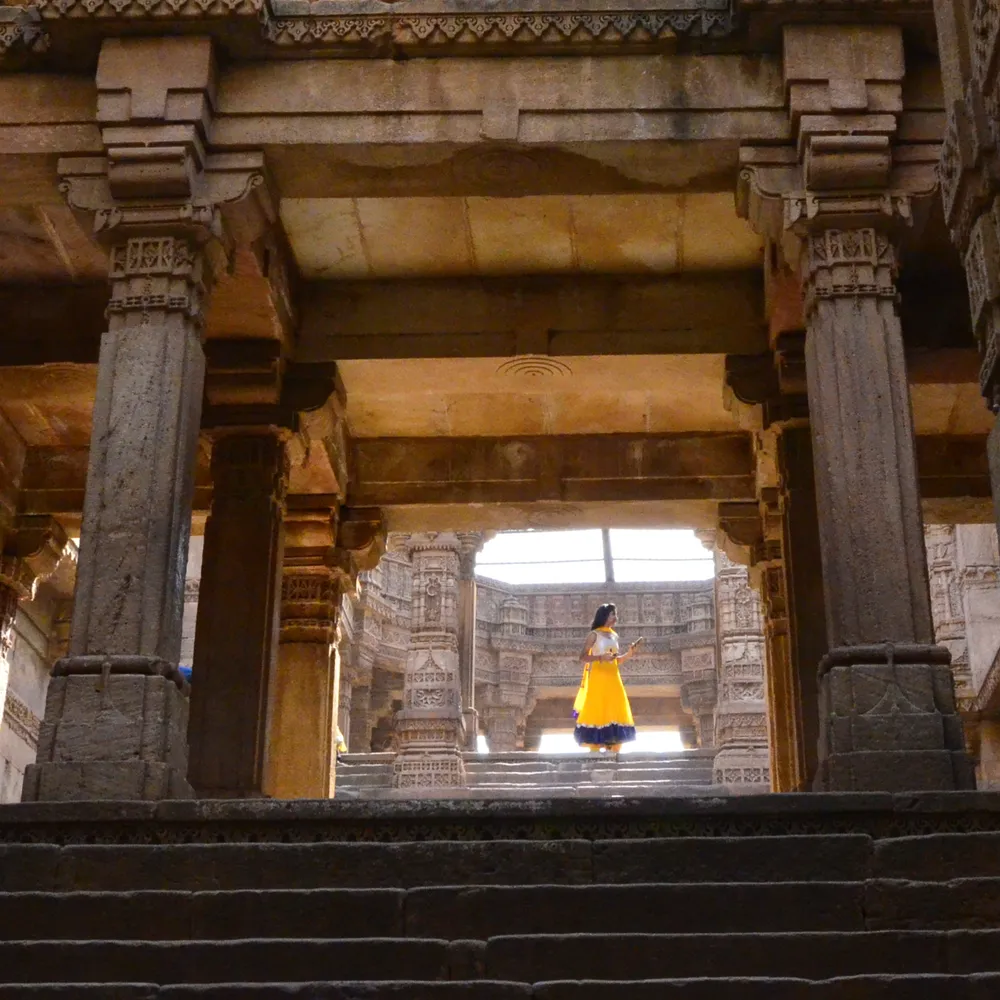
A building to understand vertically
A stepwell asks you to look down as well as across. At Adalaj, the experience of stairs, landings and openings is as important as a single decorated surface. Gujarat Tourism describes a fifteenth-century, five-storey structure with carved pillars and an octagonal opening. The Ahmedabad District Administration dates the stepwell to 1499 and associates it with Queen Rudabai. Keep those documented reference points separate from the dramatic legends sometimes repeated about the site. For a first visit, follow the architecture before trying to collect every historical story.
Follow three things: movement, light and detail
Start by noticing how a person moves from one level to another. At each permitted landing, compare the route ahead with the opening above. Then look at how the same carved surface appears in shade and in brighter light. Finally, choose one column or panel and observe its repeated forms. Gujarat Tourism highlights ornamental carvings that include village and mythological scenes. You do not need to identify every figure to appreciate the work; note what you can see, and ask a knowledgeable guide when an interpretation requires more evidence.
Plan the journey around Adalaj itself
Use the stepwell’s exact map pin rather than searching only for Ahmedabad heritage. Adalaj is outside the central Old City circuit, so allow separately for the outward journey, the visit and the return. Pick one main activity instead of combining several distant attractions because they appear in the same regional list. If you are hiring a vehicle, agree on the waiting and pickup arrangement in advance. Public transport users should verify the last part of the route and the return connection, not just the service to the wider area.
Decide how far to descend
A five-storey description is not a promise that all levels will be available on your day. Check current entry arrangements, permitted areas and any temporary restrictions before travelling, then follow the instructions on site. Anyone who finds stairs difficult can ask about what is visible from the entrance and upper permitted areas before committing to the outing. Do not assume a general accessibility label covers the whole descent. Choose a pace that lets the slowest member of your group move comfortably, and keep stairs and landings clear for other visitors.
Photograph depth without creating an obstacle
Where photography is allowed, try a wide view that shows the route, a framed view through the columns and one close architectural detail. Take each photograph from a stable, permitted position. Avoid stepping backwards while looking through a screen, climbing on stonework or asking others to clear a staircase for a long shoot. The image accompanying this article is a credited archival photograph, not evidence of current conditions. Your own caption should distinguish the date you visited from the historical date of the monument.
Keep a useful record after the trip
Write down the entrance you used, what was actually accessible and any instructions that affected your route. Separate those dated observations from the sourced background about the stepwell. A strong heritage story can explain how one landing connects the building, rather than making an unsupported claim that every carved symbol has a particular meaning. If you continue to a local shop or meal, assess that stop independently. This guide offers a way to prepare and observe; it does not claim a recent site inspection or quote unverified entry charges.