
Ellis Bridge: Reading Ahmedabad’s East–West Urban Story
Start with the city connection
AMC Heritage City records Ellis Bridge—officially renamed Swami Vivekanand Bridge—as Ahmedabad’s oldest bridge and explains that it connected the walled city on the east bank of the Sabarmati with newer development on the west. That relationship is the central story. The bridge is not only an engineering object; it marks a change in how the city expanded. Begin with a river-level or riverfront view that shows both banks, then use the steel structure as the line linking them.
Read the truss before chasing details
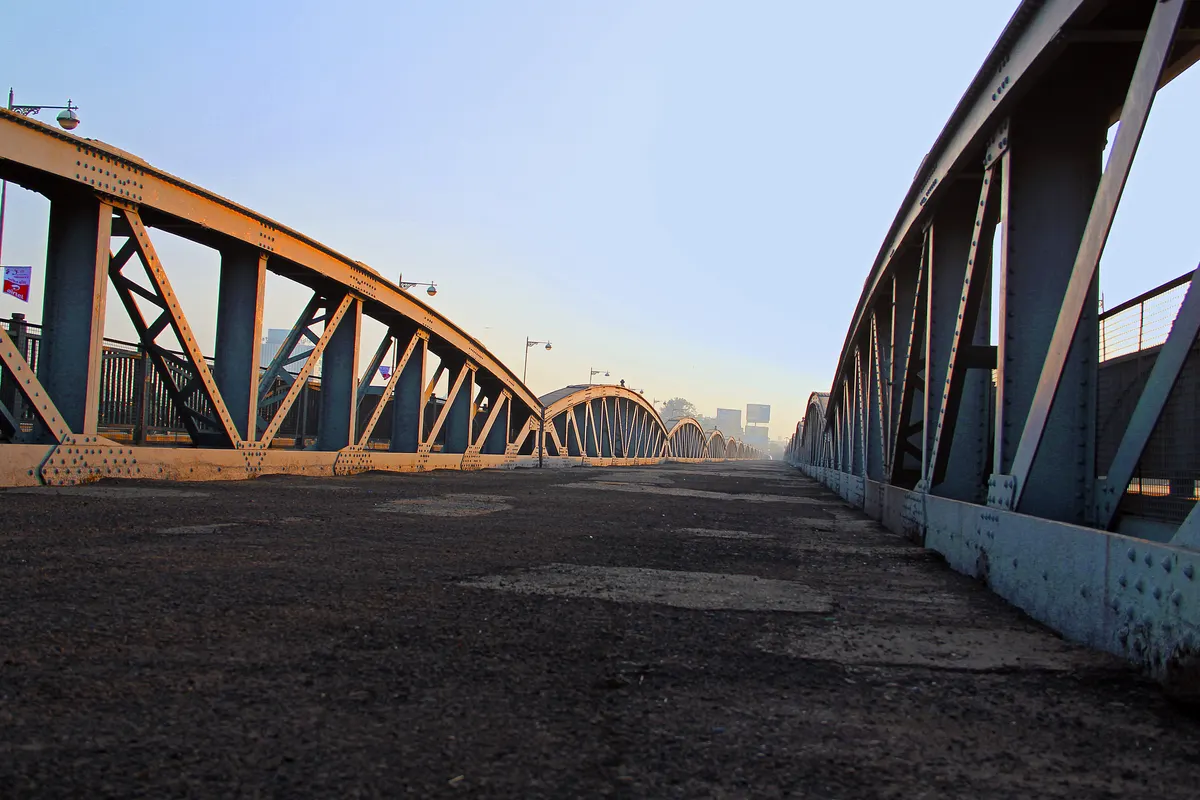
From a legal pedestrian viewpoint, follow the repeated triangular members, vertical posts and long horizontal alignment. A wide frame shows the rhythm; a medium frame reveals connections; a close frame can record bolts, plates or weathered surfaces without touching them. Do not claim a member is original, replaced or structurally important from appearance alone. Engineering history needs plans or specialist evidence, while a visitor can accurately describe what is visible.
Place Manek Burj in the wider route
AMC’s page for Manek Burj identifies it as the oldest bastion of the walled city and locates it at the end of Ellis Bridge. Pairing the two sites can make the east-bank transition easier to understand, but do not treat proximity as proof of one continuous construction phase. Give each place its own verified history. A short route can move from a river view to the bridge and then toward the bastion, provided current access and traffic conditions make that safe.
Photograph without entering danger
Never stand in a carriageway, climb barriers or step onto restricted structural areas for symmetry. Traffic patterns, maintenance zones and pedestrian access can change, so obey current signs and local directions. Use a longer focal length from a safe public position instead of leaning into moving traffic. If photographing from the riverfront, stay within open areas and avoid blocking cyclists, walkers or emergency routes. A centered image is not worth an unsafe position.
Use light to explain the form
Low-angle light can separate the truss members and cast repeating shadows, while flat midday light may be useful for recording condition. Photograph in the direction that preserves detail without turning the sky into a blank backdrop. Include one view with the Sabarmati and the city edge so the bridge remains geographically legible. Avoid removing modern surroundings in editing; they show that a historic landmark continues to operate within a changing urban system.
Create a five-shot urban-history reel
Use an establishing river view, a full truss alignment, one joint or surface detail, the east-bank relationship and a final west-bank context. Add only the municipal facts you can verify: the bridge’s official name, its status as Ahmedabad’s oldest bridge and its role connecting the older eastern city with western growth. Date the footage and avoid stating current traffic or access arrangements as permanent. Ambient city sound can carry the transition better than dramatic, unsourced narration.
Why Ellis Bridge still works as a story
The bridge turns a large urban-history idea into something visible: two banks, one crossing and a city extending beyond its earlier core. A responsible Beyond Soch article can connect architecture, mobility and memory without inventing structural explanations. Encourage viewers to observe from safe public areas, use the official heritage record and pair the bridge with nearby riverfront and walled-city sites. The result is promotional content that helps people read Ahmedabad rather than merely collect another landmark photo.