
Bandhani: Look Beyond the Dots When Buying Gujarati Tie-Dye
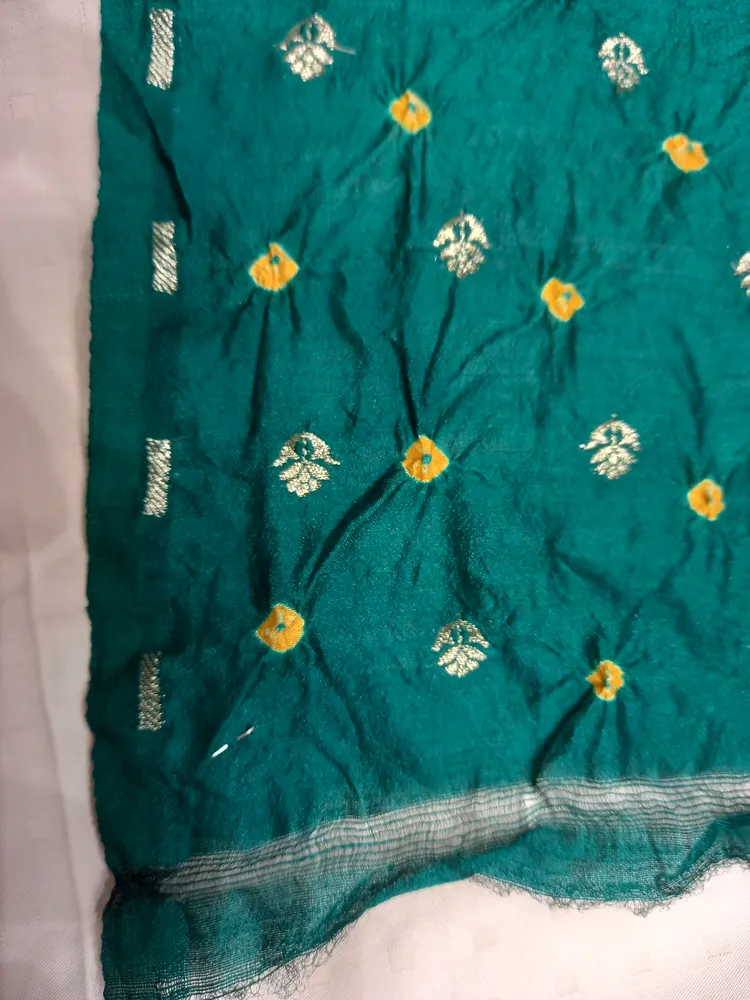
A pattern is the result of a process
Bandhani is more than a dotted look. D’source’s design resource from IDC, IIT Bombay, explains how small sections of cloth are tied to resist dye, with tying and dyeing repeated as a design requires. Khamir’s account of Bandhani in Kachchh also connects the circular motifs to tightly bound sections of fabric. Understanding that sequence gives you a better starting point when shopping: ask how the particular textile was made, rather than assuming that any fabric with a similar visual pattern represents the same work.
Separate the cloth from the surface technique
Begin with the base fabric and its composition, then ask about the tying, dyeing and finishing. These are different pieces of information. A product can be sold in Ahmedabad without every stage having been completed there. Ask which location and maker the seller can identify, and record the answer accurately. If a description says handmade, ask which stage that word refers to. A respectful question about process can reveal more than demanding an instant authenticity verdict based on touch or a photograph.
Let the seller show the piece in its intended condition
Ask whether the textile is ready to wear, still tied or awaiting finishing. Do not pull out threads or stretch a section as an informal test unless the seller explains that this is appropriate for the piece. Look at the whole composition, the border and the way the design sits across the area you will use. If buying a dupatta or sari, ask to see the parts that matter when worn rather than judging only the folded display. Any handling should follow the seller’s instructions.
Ask about colour without guessing the dye
Khamir discusses both natural-dye traditions and the use of chemical dyes in Bandhani. Colour alone therefore cannot establish a natural-dye claim. Ask what information the maker or seller can supply for the actual product, and avoid repeating a claim they cannot explain. Request care guidance for the specific fabric and dyeing, including the first wash, colour transfer, drying and ironing. If you need a garment altered or lined, discuss that before buying so your tailor’s plan fits the condition and dimensions of the textile.
Give a commission a clear brief
For a new piece, agree on dimensions, fabric, intended use, the broad composition and what level of variation to expect. Confirm the making and delivery schedule directly; do not infer the time from another artist’s video. Record the price, payment stages and the scope for changes before work begins. If you want to feature the making process, ask whether the people involved wish to be named and recorded. Buying a textile does not mean a workshop has agreed to a documentary shoot or a promotional endorsement.
Make your recommendation about the piece, not a stereotype
When sharing a purchase, credit the maker or organisation as they identify themselves and explain the verified steps behind the work. Do not turn a single conversation into a claim about every artisan, community or dyeing practice in Gujarat. The licensed process photograph here is a reference image, not evidence of a local buying visit. Vocal for Local becomes more useful when a beautiful textile is paired with accurate information about who did the work and how the buyer can care for it.