
Calico Museum of Textiles: How to Prepare for an Ahmedabad Museum Visit
Give textiles their own place in your itinerary
The Calico Museum offers a different way into Ahmedabad from a monument walk or a food outing. Gujarat Tourism records its founding in 1949 by Gautam and Gira Sarabhai and describes a collection centred on Indian textiles. Its account connects the museum with the city’s textile history and its later location in Shahibaug. Use that background to set a purpose for the visit: understanding how a textile was made, what it was used for or how it was preserved, rather than simply looking for attractive patterns.
Resolve the booking before arranging the rest of the day
Do not treat a museum listing as a guaranteed walk-in appointment. Gujarat Tourism’s page contains both older session descriptions and an advance-booking note, so check the museum’s own current instructions before relying on either. Confirm the date, session, reporting point, group size, eligibility conditions and what the visit covers. Save the confirmation and clarify how a change or cancellation should be handled. If the official website is temporarily unavailable, wait for a direct response before presenting an unconfirmed booking as part of a fixed itinerary.
Carry questions rather than a long shot list
Ask what makes a piece a textile of a particular kind: the material, the yarn, the weaving, the dyeing or an added surface technique. Those are different stages, so avoid treating a colour or a motif as a complete explanation. Read the label before guessing where an object came from. A useful personal note records the object name, the stated place or period and the technique named by the museum. Leave room for what the label does not establish, including the identity of a maker when it is not recorded.
A simple three-pass way to look
First, look at the whole object and its scale. Second, follow the way a repeated form is arranged across the surface. Third, return to the label and compare your observations with its explanation. If a guide is speaking, listen before moving to the next piece. You do not need to memorise a gallery: one carefully understood object can make a stronger memory than a list of colours. Any comparison you make with a garment at home should remain a question unless you have evidence that the technique is the same.
Check practical rules for your particular group
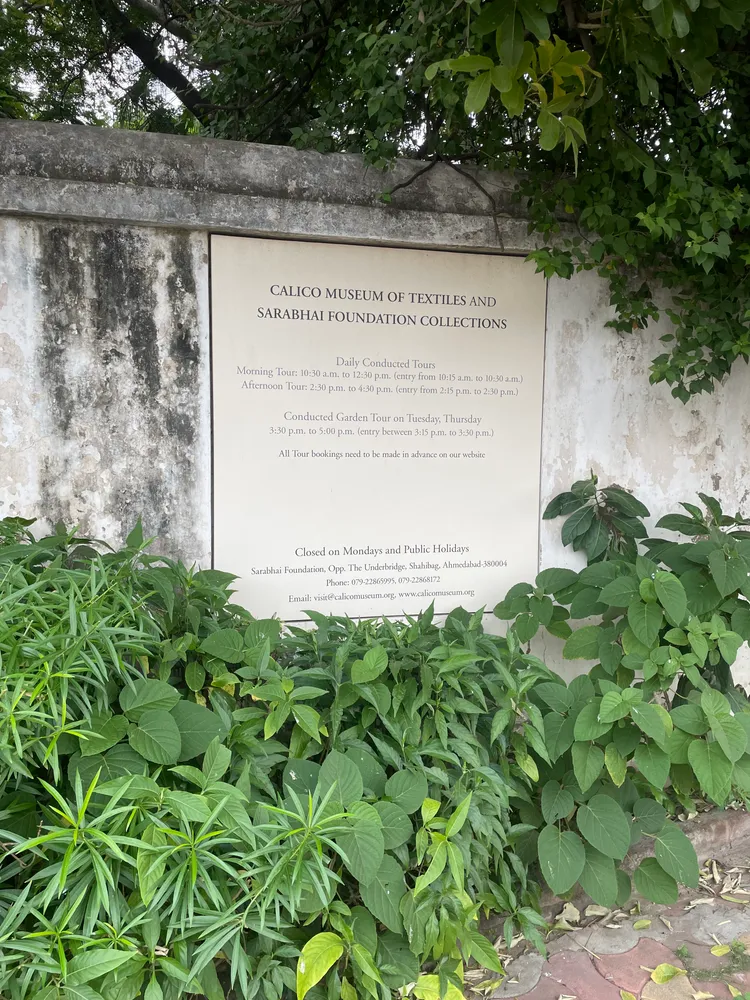
Confirm the current policy on bags, phones, photography, note-taking and children before arrival. Ask about the actual route and seating or step-free arrangements if these matter to your group. Museum rules protect objects as well as the visitor experience, so plan to enjoy the collection even if recording is restricted. The credited image here shows entrance signage, not an interior inspection by Beyond Soch. Do not use an old photograph or a third-party timetable to argue against the directions given by museum staff.
Connect learning with responsible local buying
After the visit, use a technique you learned about as the start of a conversation with a willing seller or maker. Ask which parts of a contemporary product they make and how it should be cared for. A resemblance to a museum object does not establish the age, origin or authenticity of a product for sale. Credit museum information accurately when you write about it, and keep a business feature separate from the museum’s name and reputation. This is a researched preparation guide, not a recent gallery review.