
Dada Harir Stepwell: A Respectful Architecture Guide for Ahmedabad
Why this stepwell deserves an unhurried visit
Dada Harir Stepwell, also identified by AMC Heritage City as Bai Harir ni Vav, stands in Asarwa as part of a complex that includes a mosque and a mausoleum. The municipal heritage record dates the stepwell to 1499–1500 on the evidence of Persian and Sanskrit inscriptions. That combination matters: this is not simply a deep stone well or a dramatic photography location. It is a carefully organised civic structure, a place of memory and an example of the architectural exchange visible across Ahmedabad. Build enough time into your plan to notice how circulation, shade, water access and ornament work together instead of treating the monument as a quick background.
Read the building from ground to depth
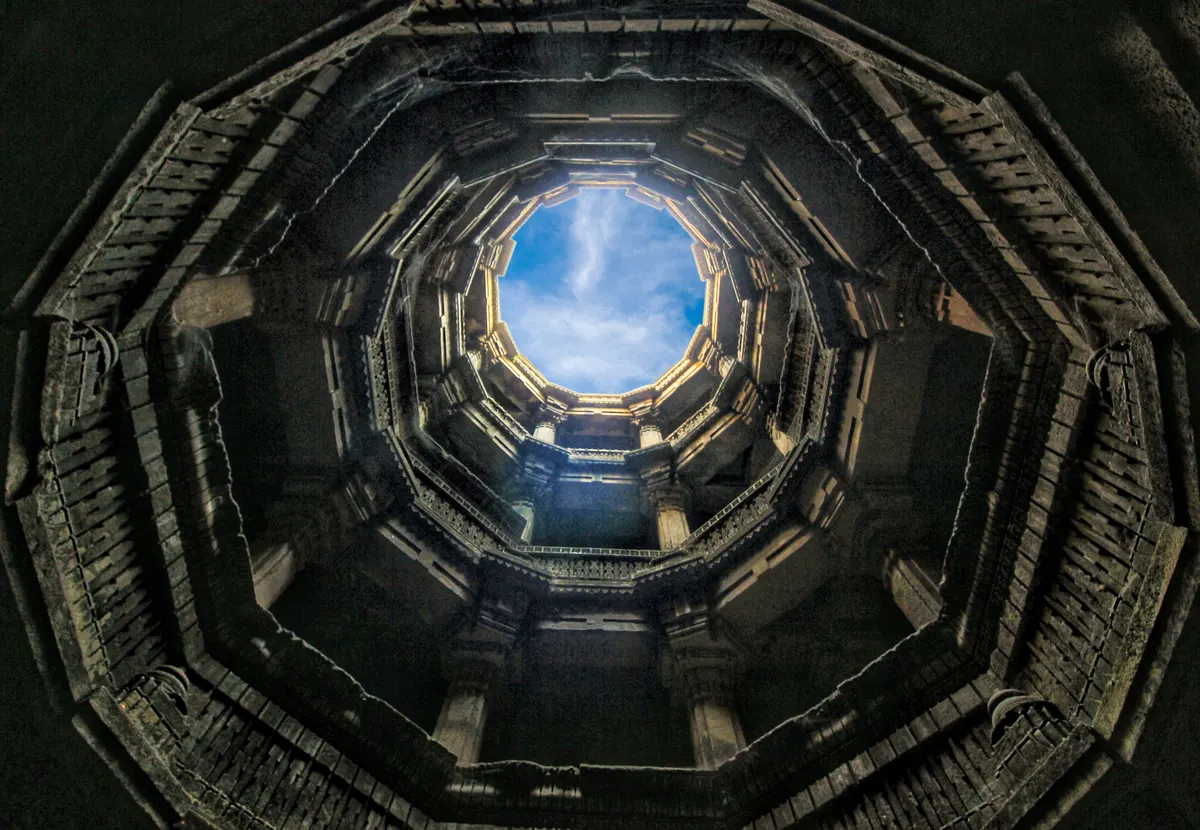
Begin above ground and locate the long axis before descending. Notice how the first flights of steps establish a repeated rhythm of pillars and landings. As you move down, look back regularly: each level frames the one above it differently, and the changing angle makes the same stone alternate between silhouette and detail. The octagonal well shaft is the visual climax, but it makes more sense after you have followed the approach. This sequence explains the engineering idea without technical jargon—the structure turns a descent toward water into a series of stable, shaded rooms.
Use light as your guide
Stepwells reward slow observation because daylight behaves differently at every level. At the upper galleries, broad openings create sharp contrast; lower down, smaller reflections reveal carved bands and column edges. Let your eyes adjust before taking a photograph, and avoid blocking narrow stairways while composing it. A useful five-frame study is: the entrance axis, one pillar bay, a shadow-to-light transition, the well shaft and a final context frame of the wider complex. That set communicates space more honestly than five near-identical upward shots.
Notice inscriptions without inventing a translation
AMC’s record specifically notes Persian and Sanskrit inscriptions. Their presence is important evidence for dating and patronage, but visitors should not guess at their meaning from appearance alone. Photograph an inscription only if access rules permit, keep the frame square enough for the text to remain legible, and use the municipal heritage record or a qualified published translation when writing a caption. A responsible story can simply say that inscriptions in two languages are recorded at the site. Precision is more valuable than a dramatic but unsupported interpretation.
Visit as a shared heritage complex
The associated mosque and mausoleum change how the stepwell should be approached. Dress respectfully, keep voices low and avoid posing on active or sensitive religious elements. Do not move objects, touch fragile carving or climb barriers for a higher angle. If worship or local activity is taking place, give it priority. The best heritage content shows scale and craft without turning people into unasked-for scenery. When faces are recognisable, seek permission before publishing them.
Plan around current conditions, not old posts
Access arrangements, maintenance and the condition of steps can change, so confirm locally before making a special journey. Wear footwear with grip, keep both hands available on dark or uneven sections and carry water without leaving packaging behind. The AMC morning-tour page includes Dada Harir Stepwell in a wider Ahmedabad circuit, but route inclusions and schedules should always be checked directly rather than copied from an old reel. Avoid promising a precise visit duration: the right pace depends on mobility, crowding and how closely you want to study the structure.
A useful Beyond Soch story angle
Frame the stepwell as climate-aware public architecture: a descent that progressively changes temperature, sound and light. Pair one wide architectural frame with short observations about the route, the bilingual inscription record and the relationship between the stepwell, mosque and mausoleum. Label the date of your footage and distinguish official facts from your visual interpretation. That approach gives viewers something they can verify while still leaving room for curiosity—and it keeps a spectacular monument connected to the people and historical systems that made it meaningful.