
Kachchh Leather Craft: A Buyer’s Guide to Material and Provenance
Begin with the craft network
Khamir traces Kachchh leather work to Meghwal artisan communities and describes historical relationships with Maldhari pastoralists. The material was transformed into durable objects for everyday use, while decorative stitching and cultural exchange shaped its visual identity. A buyer should therefore look beyond the word handmade. Ask who produced the item, where the workshop is located and how the seller knows the maker. Provenance connects an object to a living practice rather than a generic rustic label.
Do not use a historic example as a catalogue image
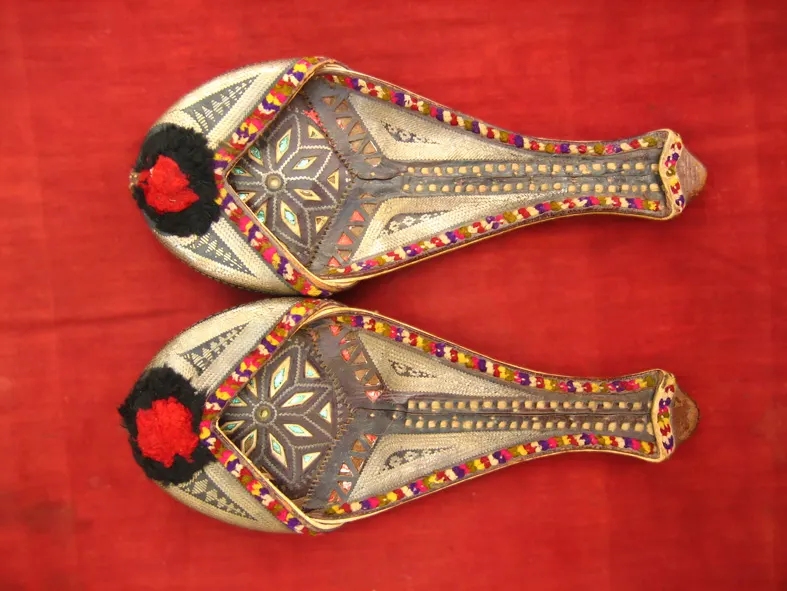
The photograph in this article shows older ceremonial-style footwear from north-east Kachchh and is included as cultural context. It is not a product currently offered by a named workshop. Contemporary leather craft may take the form of footwear, bags, belts, keychains, home objects or collaborative designs. When selling or promoting a current item, use an image of that exact item and credit its maker. Never imply that a museum or private-collection example is available for purchase.
Inspect construction in a practical order
Look at the leather surface, edge finishing, joins, stitch tension, lining, fasteners and the parts that will take repeated stress. Open and close a bag or wallet gently where the seller allows, and try footwear only with clean feet or socks according to shop practice. Handwork may show variation, but variation alone does not prove origin. Ask which steps were completed by hand and whether any components were machine cut, stitched or commercially sourced.
Ask material questions without assumptions
Khamir discusses the history of hide treatment and later design development, but an individual product needs its own explanation. Ask what type of leather or alternative material is used, how it was sourced, how it was dyed or finished and what care it needs. If a seller uses terms such as cruelty-free, vegetable-tanned or natural dye, request a clear definition and supporting information. Do not repeat a broad sustainability claim unless it applies to the specific product and production chain.
Connect decoration to other Kachchh traditions carefully
Leather pieces may use colourful thread, metal elements, cutwork or motifs that echo the region’s textile languages. Describe what is visible, but do not assign a community style from appearance alone. Ask the maker whether a motif has a specific name or association and whether another artisan contributed embroidery, weaving or metal work. Collaborative products should credit each craft contribution instead of collapsing several practices into a single anonymous Kutch design.
Compare prices through labour and use
Two objects may differ in leather quality, thickness, lining, stitch count, hardware, finishing, design development and the share paid to the maker. Compare those details and intended use rather than choosing only by surface decoration. Ask about repairs, replaceable parts and realistic wear. A lower-cost item is not automatically exploitative, and a high price is not proof of fair payment; transparent sourcing and seller information are better evidence.
Create a maker-centred product story
Agree on the artisan name, workshop, product material, filming boundaries and purchase route before recording. Show the whole object, one construction detail and one use case without making durability claims the maker cannot support. Disclose gifts, discounts or payment prominently. If you film a demonstration, say it is a demonstration rather than the complete making process. The strongest Vocal for Local content lets the audience understand who made the object, what decisions shaped it and how to care for it.