
Rani no Haziro: A Respectful Guide to Heritage and Market Life
Two identities in one place
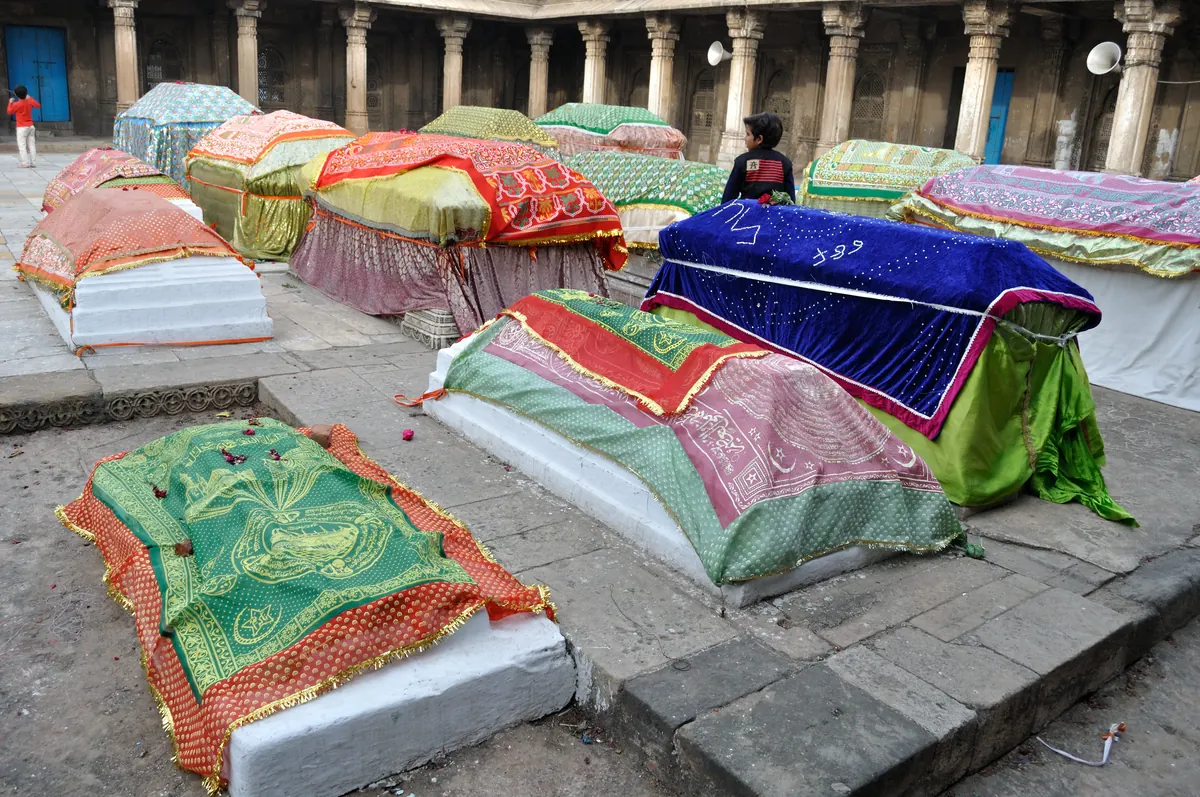
Rani no Haziro is both a historic mausoleum complex and part of an active marketplace near Manek Chowk. Ahmedabad Municipal Corporation classifies it under Sultanate-era heritage and traditional marketplaces, while its nearby-sites information places it close to Manek Chowk, Jama Masjid, the Old Stock Exchange and Badshah no Haziro. That combination matters: visitors are not entering a sealed museum. They are moving through a space shaped by memory, commerce and daily routines. A good visit therefore begins with context and restraint, not an assumption that every doorway or person is available for content.
How to approach the architecture
Start with the relationship between the enclosure, entrances and surrounding lanes. From a permitted public position, look for stone carving, screens, columns and the way light enters the complex. Avoid making definitive claims about individual tombs unless an on-site sign or reliable heritage source identifies them. Do not lean on, touch or place objects on historic fabric for a photograph. If access is limited, respect the boundary and describe only what can be responsibly seen. Heritage storytelling gains credibility when it openly distinguishes visible detail, sourced history and unanswered questions.
Shopping without reducing the place to a backdrop
Market lanes reward slow observation, but they are workplaces. If you want to feature textiles, jewellery or another product, first ask the seller whether photography is welcome and whether the quoted information may be published. Record the material, making process, place of origin and care instructions separately; do not label a product handmade, antique, silver or locally produced without confirmation. Compare workmanship rather than pressuring a seller for a staged bargain. Supporting local commerce means paying fairly for chosen goods, crediting the business correctly and avoiding misleading claims about scarcity or authenticity.
Photography and privacy
Use an establishing frame to show the spatial relationship between heritage and market activity, then focus on architectural or product details. Obtain clear permission before a recognisable close-up of a person, especially a child. A general crowd scene from a public position is different from following an individual with a camera. Keep passages open, avoid tripods in narrow lanes unless explicitly allowed and do not record private conversations. If someone withdraws consent, do not publish that footage. These habits protect residents and produce a more thoughtful record of the place.
Connect nearby sites carefully
The municipal heritage directory lists several important places nearby, making Rani no Haziro suitable for a compact old-city circuit. Choose two or three stops instead of promising an unrealistic all-in-one itinerary. A route might pair the complex with Manek Chowk and Jama Masjid, while another could focus on market and mercantile history around the Old Stock Exchange and Fernandes Bridge book market. Confirm current access and walking conditions on the day. Religious observances, market congestion and civic work can affect movement, and a creator should never present an old schedule as a live guarantee.
A balanced short-form story
For a one-minute reel, establish the location, explain its dual heritage-and-market character, show two verified architectural details, introduce one consenting local seller or product, and close with a reminder about respectful visiting. Add source links in the caption and identify the date of filming. Avoid dramatic ‘secret place’ language: Rani no Haziro is a known part of Ahmedabad’s historic landscape, not a discovery owned by the creator. The strongest promotion invites audiences to value the people and cultural setting as much as the visual texture.