
Teen Darwaza: A Practical Walking Guide to Ahmedabad’s Historic Gateway
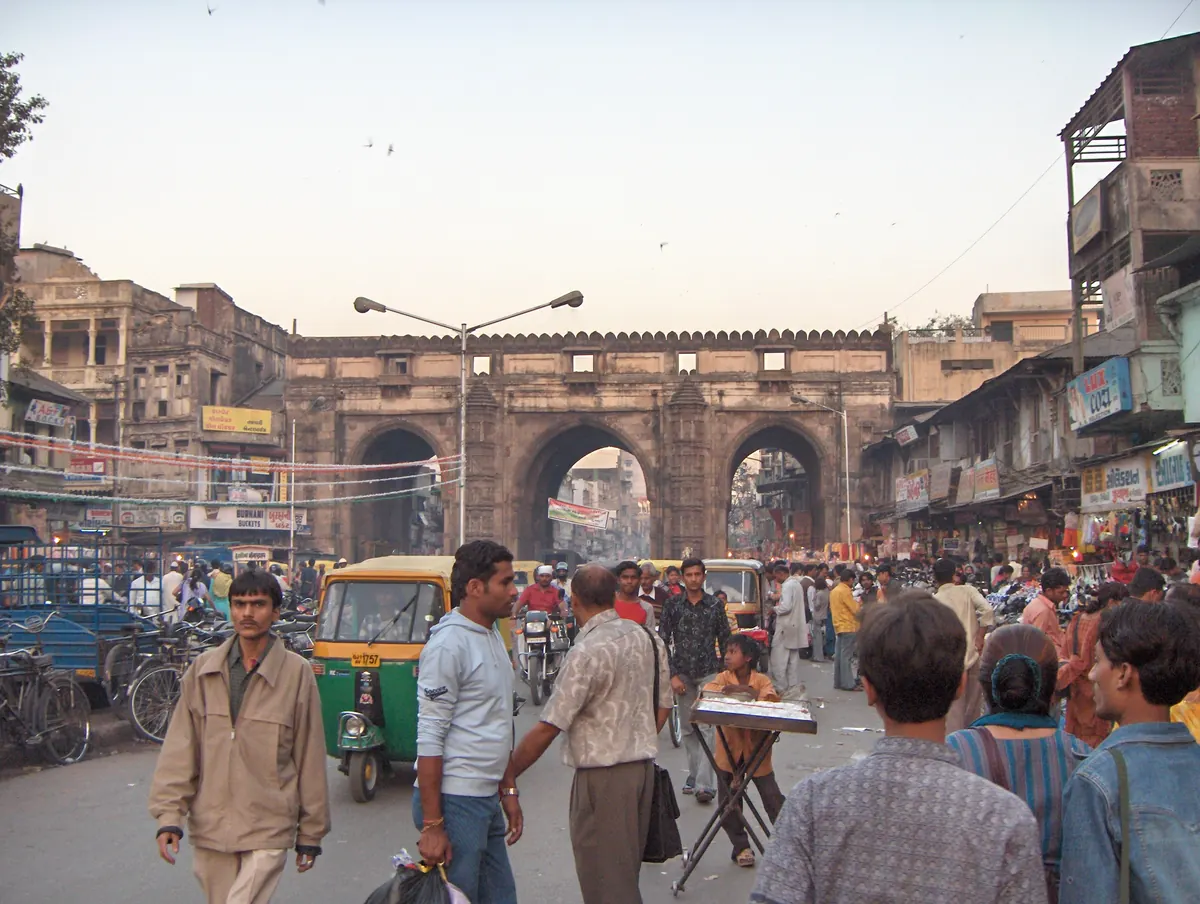
Why this gateway matters
Teen Darwaza is not an isolated monument placed inside a quiet garden. It remains part of a busy urban fabric where heritage, traffic, worship, trading and everyday movement meet. Ahmedabad Municipal Corporation’s heritage portal says the royal gateway was constructed soon after the city was founded in 1411 and completed in 1415. Its three arches once framed the approach between the Bhadra precinct and the city beyond. Seeing it in context helps explain why a gateway could serve as architecture, ceremony, security and public space at the same time.
Read the structure before taking photographs
Begin with the overall rhythm: one central arch, two flanking arches, heavy masonry and smaller openings above. Then look for surface details, changes in stone colour and the relationship between the monument and the street. A wide photograph can record the three-part composition; a closer frame can document carving without implying access to restricted areas. Do not step into moving traffic for a symmetrical shot. A technically imperfect photograph made from a safe public position is better than a dramatic frame that obstructs commuters or puts anyone at risk.
Build a short old-city route
A sensible heritage walk can connect Teen Darwaza with Bhadra Fort, Jama Masjid and the Manek Chowk area because the municipal heritage pages place these sites within the same historic core. Treat this as a sequence of short observations rather than a race to collect landmarks. Pause at each transition: royal gateway to market street, open plaza to dense lane, and civic monument to active place of worship. Use the official heritage portal or a current map on the day of the visit, because access routes, traffic diversions and pedestrian conditions can change.
Respect a working neighbourhood
The street is not a film set. Ask before making a close portrait of a vendor, avoid filming customers during transactions, and keep shop entrances clear. At nearby religious sites, dress modestly, follow posted rules and put photography second to the sanctity of the place. Record prices, opening times or claims only when a current, identifiable source provides them; they should not be inferred from an old reel. Carry back your litter, keep audio levels low and remember that a heritage district stays meaningful because people continue to live and work there.
A useful observation checklist
Note the date and approximate viewpoint for every photograph. Capture one establishing view, one architectural detail, one street-context frame and one transition toward the next stop. Write down what is directly visible separately from what a source explains. For example, ‘three arches carrying traffic’ is an observation, while a construction date belongs to a cited heritage record. This simple separation produces more trustworthy captions and makes later fact-checking easier. It also prevents a creator from turning a complex, continuously used monument into an unsupported legend or a list of viral superlatives.
Make the story local, not generic
A strong Teen Darwaza reel can open with the gateway as an orientation point, move through two or three visual details, and end by showing how the surrounding streets remain connected to commerce and community. Use natural ambient sound only where it does not invade private conversations. Credit the municipal heritage source in the caption and identify archival material if any is used. Beyond Soch’s editorial approach is to help viewers notice Ahmedabad more carefully—not to claim a private tour, guaranteed access or a recent on-site experience that did not happen.