
Dal Dhokli: A First-Timer’s Guide to Gujarati Comfort Food
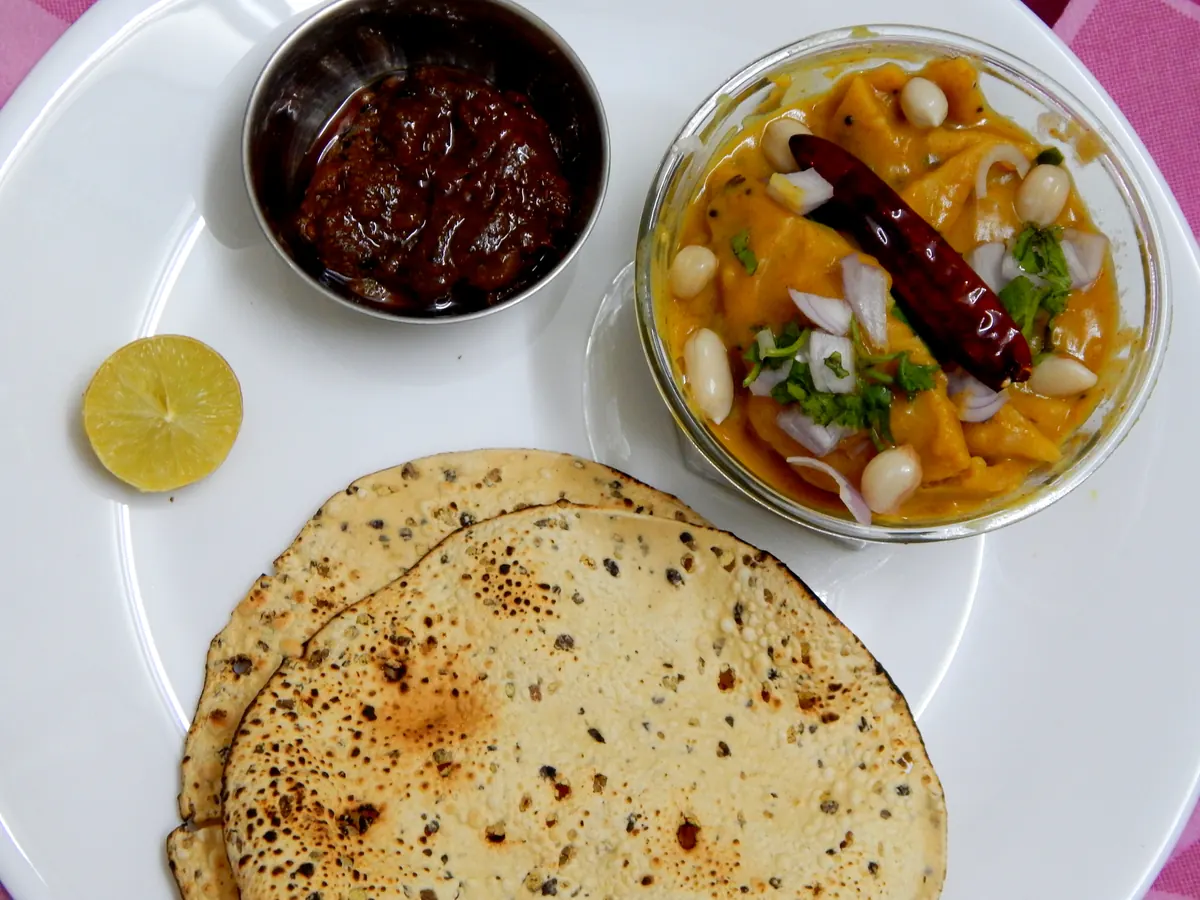
What arrives in the bowl
Dal dhokli combines pieces of rolled wheat-flour dough with simmering dal, creating a substantial dish that can function as a complete meal. Gujarat Tourism describes Gujarati food through the relationship of dal, shaak, kathol, accompaniments and contrasting textures; its own social description of dal dhokli calls it spiced whole-wheat dhokli simmered in Gujarati dal. Recipes vary by household and restaurant, so the exact sweetness, sourness, thickness and tempering should not be treated as fixed. The useful definition is the cooking relationship: the dough pieces cook in the lentil preparation rather than being served separately.
Texture is the best starting point
A first-time diner can look for two textures: tender dhokli pieces that still hold their shape and dal thick enough to coat them without becoming a dry paste. Freshly cooked portions may continue to thicken as they stand because the wheat releases starch and absorbs liquid. That is not automatically a flaw, but it explains why the same batch can feel different over time. Ask whether the kitchen serves it to order or from a prepared batch if that matters to you; do not assume. Stir gently before tasting so the tempering and garnishes are distributed.
The Gujarati flavour balance
Many Gujarati interpretations are sweet, sour and savoury together, but intensity differs widely. Jaggery or sugar may provide sweetness, while tamarind, kokum, lemon or another souring ingredient may appear depending on the cook. Spices and tempering can include mustard, cumin, curry leaves, chilli, asafoetida or warming whole spices. These are common patterns, not a mandatory formula. When ordering, ask whether the version is noticeably sweet, whether it contains peanuts, and whether ghee is used. That question is more useful than demanding an imagined single ‘authentic’ recipe.
Allergy and dietary questions
Wheat is central to conventional dhokli, so the dish is normally unsuitable for someone avoiding gluten unless a kitchen explicitly offers and controls a different recipe. Peanuts, dairy, sesame or other allergens may appear in the dal, tempering or garnish. Vegetarian does not necessarily mean vegan because ghee can be used. Cross-contact depends on the kitchen. State the ingredient you must avoid, ask the staff to check the preparation and choose another dish if they cannot confirm. An editorial guide cannot guarantee the safety of a particular restaurant’s serving.
How to order and pair it
Dal dhokli is filling, so one bowl may be better treated as a main course than a small side. If you are exploring several Gujarati dishes, share only when the restaurant permits it and start with a smaller order. Onion, pickle, papad, chaas or a simple salad may be offered, but accompaniments vary and should be confirmed. Taste the dish before adding lemon or extra chilli. The aim is to understand the kitchen’s balance first. If you enjoy a thinner consistency, ask politely whether extra dal is possible rather than judging the serving by appearance alone.
How creators can describe it honestly
Film the spoon lifting a dhokli piece, the coating of dal and the finishing tempering, but do not claim a recipe, ingredient list or cooking time without asking the kitchen. Say what you tasted—mild, tangy, sweet-forward or spicy—while making clear that it is one serving from one place. Avoid phrases such as ‘Ahmedabad’s best’ unless a transparent comparison supports them. Credit the business, mark gifted or paid meals as advertising where required, and give viewers practical information they can verify. A precise explanation is more valuable than a generic reaction shot.