
Fafda: A Gujarati Breakfast Guide for First-Time Diners
Know the basic snack before the pairing
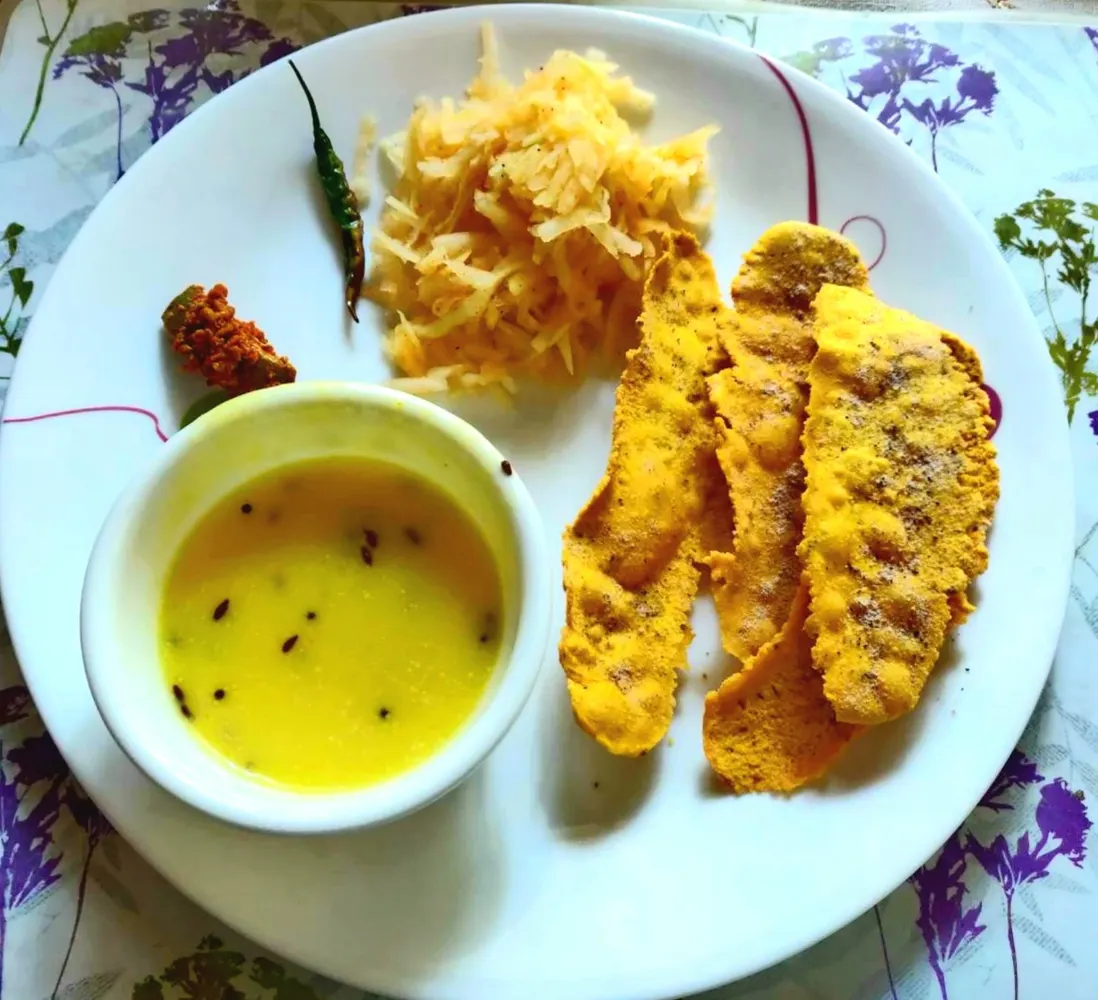
Gujarat Tourism describes fafda as a crisp yellow snack made from a gram-flour batter with carom seeds and oil, shaped and deep-fried. That gives a first-time diner the essential expectation: a thin, savoury, brittle strip rather than a soft steamed farsan. Freshness changes the experience quickly, so ask when the current batch was fried instead of judging it only by colour. A deep yellow shade does not by itself prove spice level, crispness or quality.
Understand the usual accompaniments
The official tourism page pairs fafda with fried chillies, papaya sambaro and besan chutney. Each changes the bite differently: chilli adds heat, shredded papaya adds moisture and contrast, and the chutney softens the crisp texture. Vendors may serve other accompaniments or use local names, so confirm what is on the plate. If you want to understand the fafda itself, taste one small piece plain before adding chutney or combining several flavours.
Treat jalebi as a pairing, not a rule
Fafda and jalebi are strongly associated in Gujarati breakfast culture and festive eating, but a serving does not become invalid without the sweet. If ordering the combination, alternate small bites and notice the contrast between savoury crunch and syrupy sweetness. Ask for a modest quantity first because both elements are rich. Avoid presenting the pairing as a nutritional recommendation; it is a cultural and sensory combination, and individual dietary needs require appropriate professional advice.
Ask clear allergy and ingredient questions
Gram flour is central to the official description, but specific shops may use additional ingredients, frying mediums or shared equipment. Ask directly about gluten cross-contact, peanuts, dairy, sesame and any other allergen relevant to you. Also confirm whether the chutney contains curd, gram flour or other ingredients. A generic food article cannot guarantee a vendor’s recipe or kitchen process. When staff are unsure, choose cautiously rather than relying on appearance.
Order takeaway with texture in mind
Steam and wet accompaniments can soften fafda during travel. Ask for liquid chutney and papaya sambaro in separate containers and avoid sealing very hot pieces where trapped moisture will collect. Follow the seller’s advice on how soon to eat the batch; do not invent a storage period from an online recipe. If ordering for a group, confirm portion size by weight or serving with the shop because the number of irregular strips is not a reliable measure.
Describe a serving without declaring a winner
Useful tasting words include crisp, brittle, airy, dense, salty, carom-forward, chilli-hot or softened by chutney. State which vendor and batch you tasted and the date. Do not call one plate Ahmedabad’s best, original or most authentic without evidence. If the food was gifted, discounted or part of a paid reel, disclose that material connection. A specific account of texture and accompaniments is more credible than a citywide ranking based on one breakfast.
Build a practical Beyond Soch reel
Film the storefront only with permission, then show the batch, a full plate, one clean break that demonstrates texture and the accompaniments separately. Confirm ingredient names with the maker before adding labels. Keep the camera away from hot oil and service traffic. Close with currently verified location or ordering information and credit the shop accurately. This structure promotes a local food business while giving viewers useful questions—freshness, accompaniments, allergens and takeaway packing—rather than empty hype.