
Patan Patola Explained: Why the Pattern Begins Before the Weaving
Understand what double ikat describes
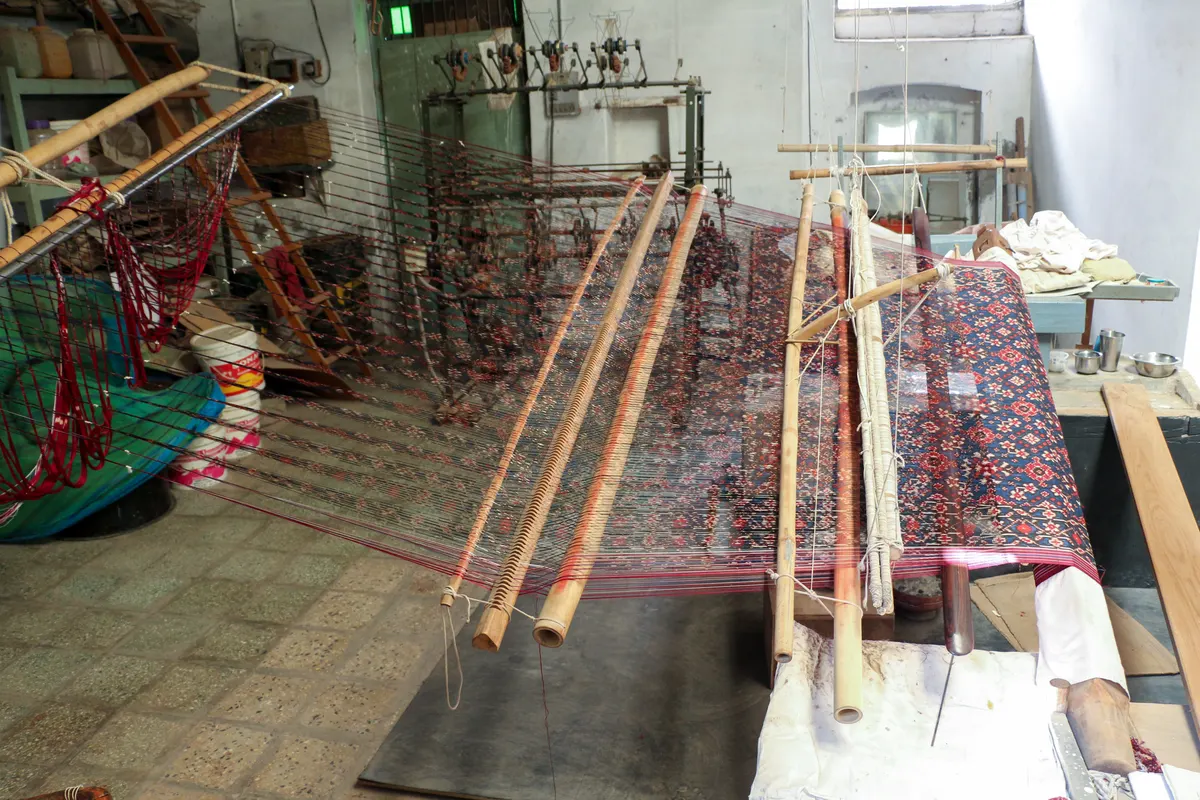
The Patan District Administration identifies Patola as a double-ikat woven sari associated with Patan. Gujarat Tourism explains that the pattern involves tying and dyeing both the lengthwise and crosswise silk threads before weaving. These thread systems are called warp and weft. The important starting point is the sequence: preparation of the yarn is part of making the design, rather than a finished cloth simply receiving a similar pattern afterward. You do not need a textile qualification to ask a seller to explain that sequence for the piece they are showing.
Do not let a broad name hide the actual process
Gujarat Tourism also distinguishes single-ikat work produced in parts of Surendranagar and Rajkot from Patan’s double-ikat tradition. Ask what a product description means in that particular sale: double ikat, single ikat, a printed pattern or another construction. A clear explanation can value different kinds of work without pretending they are interchangeable. Selling a textile in Ahmedabad does not by itself establish where it was woven. Ask for the maker and place information that the seller can actually support, and keep uncertainty visible in your own notes.
Look for an explanation rather than a dramatic test
If a maker or guide can demonstrate the preparation or loom, ask how the planned thread pattern relates to the woven result. Where only a finished textile is available, ask what documentation or maker information accompanies it. Do not damage, pull or soak a product as an informal authentication experiment. A photograph of a loom, including the archival reference used here, cannot establish the origin of an unrelated sari. The goal is to connect an object with evidence, not to claim that one visual trick can settle every question.
Plan a learning visit separately from a purchase
If you intend to travel to Patan for a museum or workshop, confirm the actual visitor arrangement before planning the journey from Ahmedabad. A tourism listing is not a promise of an unscheduled demonstration or access to someone’s working loom. Explain whether you want to learn, buy or film, because those requests involve different time and permissions. A craftsperson should be able to decline recording without the conversation becoming a negotiation about the value of their work. Do not assume a visit includes a personal tutorial.
Keep the information with the textile
For a purchase, save the stated material, process, dimensions, maker credit, price paid and product-specific care and exchange terms. If it is a gift, pass those details to the recipient. If you write about it, distinguish what you verified from what the seller told you and avoid inventing a production time, family lineage or certification. No seller, price or finished sari is endorsed by this guide. Understanding how a pattern is made is a first step toward a more accurate appreciation of local craft, not a substitute for checking a particular product.