
Tangaliya Weaving: How to Read and Buy Gujarat’s Dotted Textile Craft
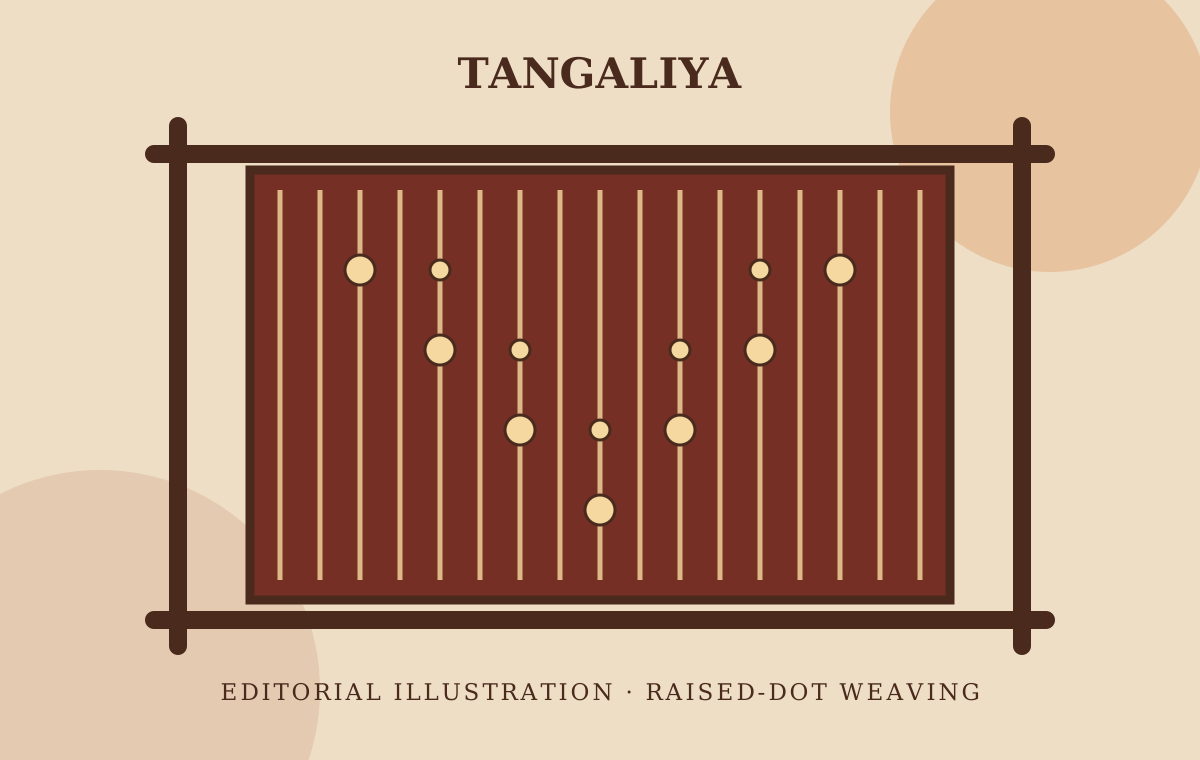
What makes Tangaliya recognisable
Tangaliya is associated with Surendranagar district in Gujarat and is known for small raised dots that form geometric patterns within the woven textile. India’s official One District One Product page identifies Tangaliya Shawl with Surendranagar and describes wool and cotton examples with geometric patterning. Research on the craft explains that the dots, often called dana, are created through an extra-weft or warp-binding process rather than printed on the finished surface. This distinction matters: the texture belongs to the structure of the cloth. A buyer should look and feel for integrated raised motifs, while remembering that contemporary products may use varied yarns and formats.
Craft, community and continuity
Documentation links the tradition to the Dangasia weaving community and to the clothing needs of pastoral communities in the region. That history should not become a decorative marketing phrase detached from the people who carry the knowledge. When a seller names an artisan, cooperative or village, write it down accurately and ask permission before using the story in promotional content. Avoid claiming that every dotted textile is centuries old or made by the same community. The age belongs to the tradition; a particular product has its own maker, materials and date.
Questions to ask before buying
Ask who wove the piece, where it was woven, which fibres were used and whether the raised pattern was produced on the loom. Request care instructions that match the fibre rather than relying on a universal rule. For a garment or home product, inspect both faces, edges, joins and the consistency of the motif. Small irregularities can reflect handwork, but they do not by themselves prove origin. A credible seller should be able to explain the product without inventing a dramatic certification. Keep the bill, maker card or written provenance supplied with the piece.
Understand the GI reference
Tangaliya Shawl is presented on the Government of India’s ODOP portal as a product of Surendranagar. Geographical indication language is specific: it relates a registered product to its recognised geographic origin and producer framework. It does not mean that any seller using a similar dot motif can apply the name freely, nor does it automatically guarantee every aspect of an individual item’s quality. If GI provenance is important to your purchase, ask for the producer or authorised-source information and verify rather than relying only on a hang tag or social-media caption.
Care begins with fibre information
Wool, cotton and blended contemporary products can respond differently to water, friction, heat and storage. Follow the maker’s directions. When no directions are provided, ask before washing; do not assume a shawl and a cotton accessory need the same treatment. Store a clean, fully dry textile away from direct sunlight and avoid pulling at raised dots. For repairs, contact the seller or an experienced textile professional instead of trimming a loose-looking yarn. Good care is part of Vocal for Local because it extends the life and usefulness of a labour-intensive object.
Create content that returns value
A useful craft reel can show the overall piece, the raised-dot texture, the reverse, the edge finishing and—only with consent—the maker or seller explaining one process step. Put the artisan, cooperative or verified source in the caption and disclose any payment, gift or affiliate arrangement. Do not recreate a sacred, community-specific or proprietary motif simply because it photographs well. The aim is not to turn Tangaliya into a trend texture; it is to help audiences recognise skilled weaving, ask better questions and direct attention toward traceable local production.