
Undhiyu: A Gujarati Winter Dish Guide for Curious First-Time Diners
Why undhiyu belongs to winter
Gujarat Tourism identifies undhiyu as a seasonal specialty commonly eaten in January and describes it as a preparation of vegetables with muthia. That seasonal link is useful because the dish is best understood through the produce available in cooler months, not as a fixed generic curry. The exact mix and method vary by household, region and cook. A first-time diner should expect layered vegetables, spices and dumpling-like muthia, while remaining open to a version that looks or tastes different from a photograph online.
Ask which style is being served
The word undhiyu covers meaningful variation. Surat-associated versions, home recipes and restaurant preparations may differ in moisture, sweetness, oil, vegetable choice and the balance of fresh coconut or herbs. Instead of asking which version is authentic, ask the vendor or host what distinguishes their style. That question invites information without forcing one recipe to represent all of Gujarat. If a menu gives no detail, ask whether the dish is dry or gravy-like, whether muthia are included and how spicy the current batch is.
Read the bowl before judging it
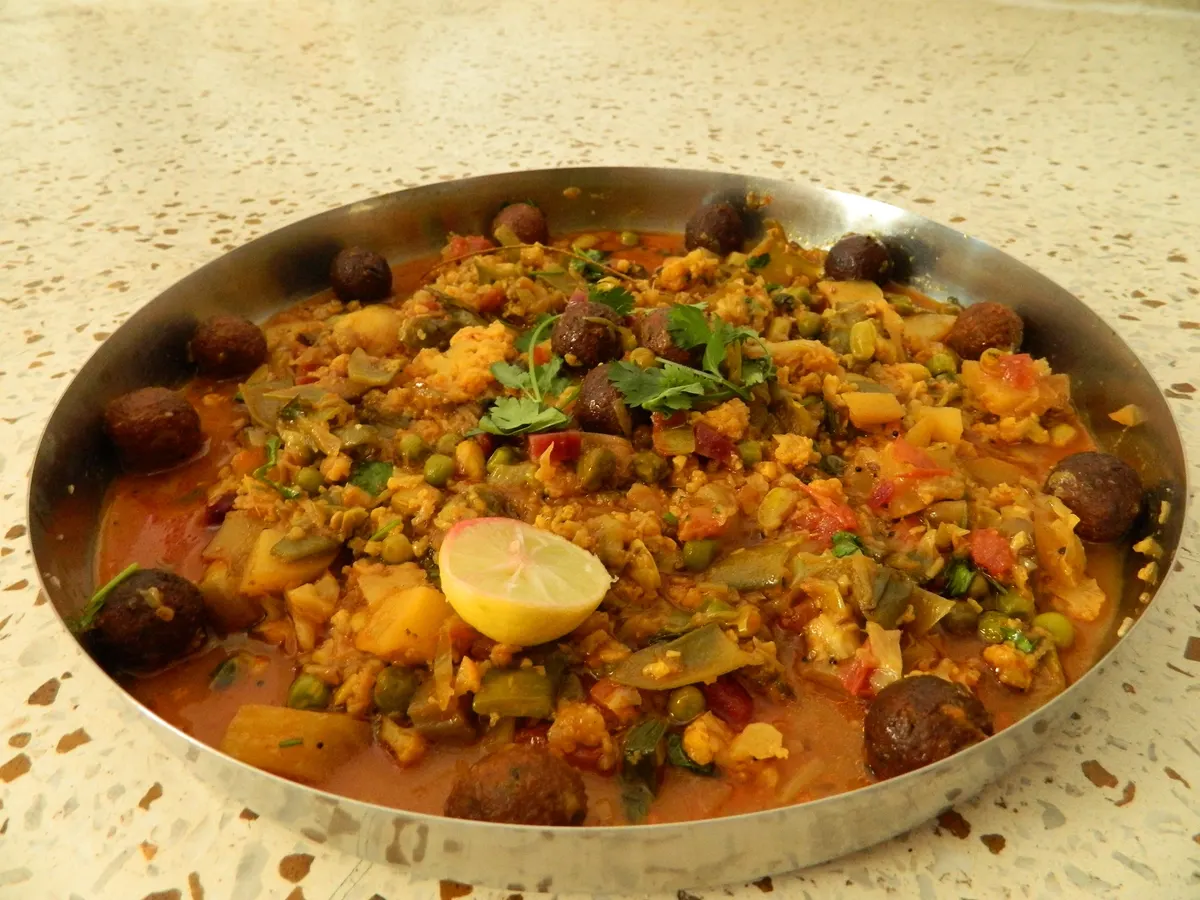
Undhiyu is visually dense, so identify components gradually. Look for intact pieces of vegetables, green herb-and-spice coating and muthia that may be round or irregular. Texture is part of the experience: some vegetables will be soft, others firmer, while dumplings absorb flavour differently. Mix only a small portion at first instead of flattening the whole serving. That lets you compare bites and understand how the preparation is constructed. Colour alone is not a reliable measure of heat or quality.
Build a balanced first plate
Order a moderate portion and pair it with the bread offered by the establishment rather than assuming one compulsory combination. If several winter dishes are available, share them so each remains distinct. Ask about accompaniments and allergens: recipes can include sesame, peanuts, coconut, gram flour, dairy or other ingredients depending on the cook. Staff, packaging or the person who prepared the food is the right source for that specific batch. A general guide cannot guarantee ingredients or suitability for an allergy.
Buy from local kitchens with useful questions
For takeaway or a homegrown food business, ask when the batch was prepared, how it should be transported and what reheating method the seller recommends. Do not invent a storage period from a social-media caption. Note the portion size before ordering for a group, and tell the seller if the food will travel far. Clear questions protect the dish’s texture and reduce waste. They also give a small kitchen a fair chance to explain its process instead of being compared only on price or visual garnish.
Create food content without staging a review
If you have not tasted a particular vendor’s undhiyu, do not call it the best, famous or must-try. Make an explainer instead: show the full serving, identify visible components with confirmation, include one texture close-up and credit the maker. Disclose a gifted or paid serving clearly. Natural window light and a clean neutral surface are enough; excessive saturation can misrepresent the food. Record the date because seasonal availability changes, and distinguish a representative image from the exact dish being discussed.
A respectful vocabulary for the first taste
Describe what you actually notice: soft or firm vegetables, herb-forward aroma, a sweet-savoury balance, a roasted note, the texture of muthia or the level of heat. Avoid claiming that all Gujarati food is sweet or that one bowl defines the state. Gujarat Tourism itself presents a broad cuisine with seasonal and community variation. The most useful conclusion is specific: which textures worked together, what you would ask next time and whose preparation you tasted. Curiosity makes a stronger local-food story than a universal verdict.