
Sarkhej Roza: Courtyards, Jalis and a Slower Ahmedabad Visit
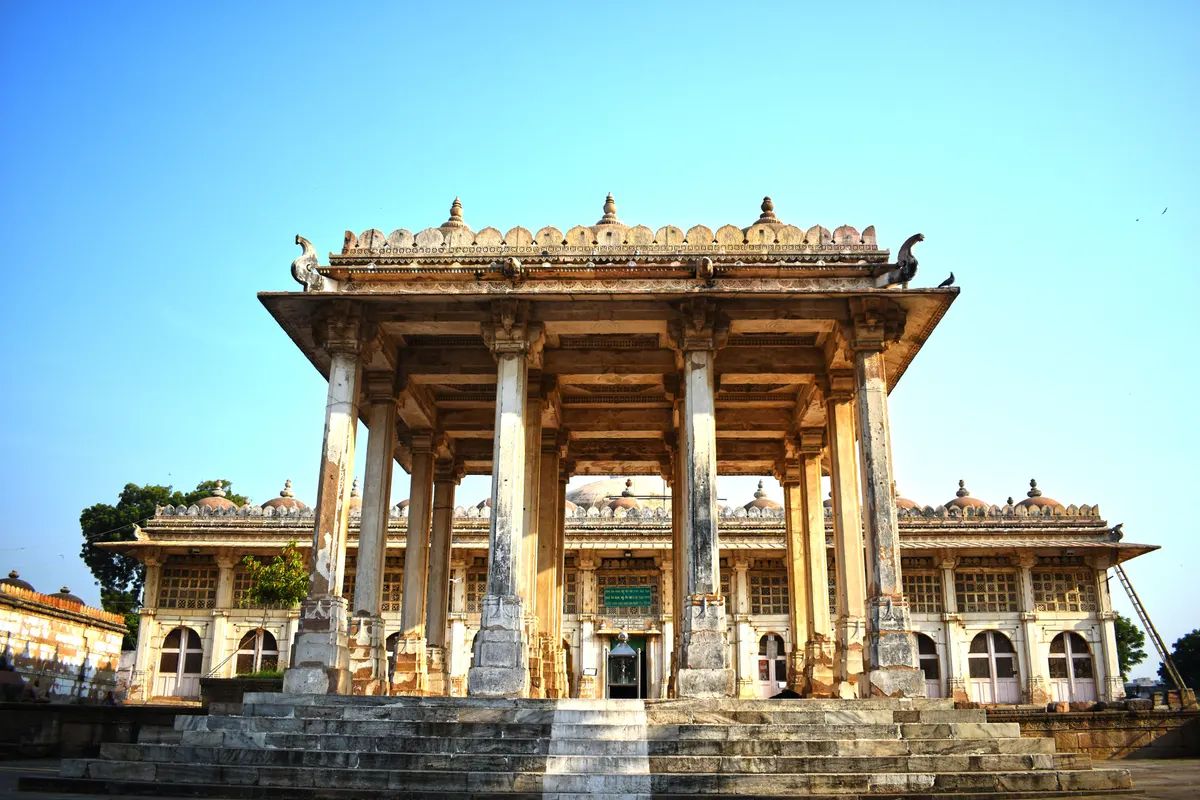
Begin with the relationship between buildings
Sarkhej Roza rewards a different kind of attention from a single-façade landmark. Gujarat Tourism identifies it as a mosque, tomb and palace complex in Makarba, associated with the Sufi figure Ahmed Khattu Ganj Baksh. Its account describes buildings arranged around a large tank and later additions under Mahmud Begada. Start with that relationship between open space, water infrastructure and built edges. The question is not only which building looks most striking, but how the different spaces belong to one setting.
Choose three things to notice
Use a simple sequence: first the scale of a courtyard, then the rhythm of a line of columns, and finally one stone screen. Gujarat Tourism specifically draws attention to the geometric jalis. Compare the pattern as an object with the light it lets through, from permitted positions only. You do not need to assign a symbolic meaning to every shape. If you want a historical explanation of a particular structure, consult a reliable source or a knowledgeable guide rather than attaching a popular story to whatever you photograph.
Plan a Makarba outing, not an Old City detour
Save the precise entrance location and work out the return journey before leaving. Sarkhej Roza is not part of the compact Kalupur-to-Jama Masjid walking route, so proximity within the same city should not be confused with an easy additional stop. Allow time to arrive, get oriented and pause instead of setting a deadline based on a short reel. If your group needs step-free access or frequent seating, ask about the specific areas you hope to see. Keep your plan flexible if a section is unavailable.
Let worship and local use set the boundaries
A historic religious complex is not an empty photography set. Confirm current visitor access, clothing expectations, footwear arrangements and recording rules at the entrance. Keep clear of prayer routes and avoid filming worshippers closely without permission. If an area is restricted, do not interpret another visitor’s photograph as permission to enter. Be equally considerate in open areas: a group conversation or long camera setup can interrupt people who use the space for reasons unrelated to sightseeing. Follow the directions given on your day.
Make a small, purposeful photo sequence
Where permitted, take a contextual view, a view that shows a transition between spaces and a detail of a screen or column. Keep water-side edges and any barriers out of your positioning decisions: do not move into an unsafe or prohibited place for symmetry. The archival photograph in this article illustrates the site; it cannot establish today’s water level, maintenance work or available routes. If you publish your own visit, record its date and say which part of the complex your image shows.
Carry one question home
Before leaving, choose something you want to understand better: the use of a courtyard, the construction of a screen or the sequence in which buildings were added. Record the source behind any historical explanation. A clear account of one relationship is more useful than calling every part of the complex a hidden gem. This article is researched planning advice, not a recent on-site review. Check present-day arrangements directly, and treat any nearby meal or shopping stop as a separate experience rather than an implied recommendation from the monument.